 Back
BackCouncil of Australasian Catholics (CAC)
(formerly Australasian Catholic Coalition for Church Reform)
and Garratt Publishing
THE CHANGING FACE OF CATHOLICISM
Webinar
Thursday 8 October 2026
There are many different streams in lay Catholicism, represented by various types of formal and informal group activities.
This webinar provided representatives of a selected range of groups – old and new, big and small – the opportunity to introduce themselves by speaking to their essential principles and driving forces. Some focused outwards and others inwards, some on social justice and/or education ministries; others on dialogue and/or spirituality. They all represented the changing face of modern Catholicism in Australasia.
The panel featured Margaret Bounader – Association of Ministerial Public Juridic Persons (AMPJP), Denise Playoust – Catalyst for Renewal, Jo Ayers and John Collins – Rongopai Eucharistic Community, John Scoble – St Lucia Spirituality, Petra Ball and Terry McDevitt – Teams of Our Lady, and Mark Gaetani – St Vincent de Paul Society.
John Warhurst moderated the event.
The presentation was recorded and is available to view below.
SPEAKERS
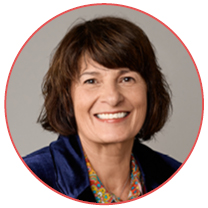
Margaret Bounader
Association of Ministerial Public Juridic Persons (AMPJP)
Margaret is the inaugural chair of Mercy Ministry Companions and a member of the AMPJP Council. For ten years she worked as an Australian diplomat holding Trade Commissioner positions in Singapore, Malaysia, South Africa and Nigeria.
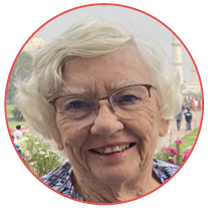
Denise Playoust
Catalyst for Renewal
Denise is the president of Catalyst for Renewal based in Sydney. She is a retired science teacher and school administrator who in retirement has volunteered as a catechist and Vinnies interviewer among other community activities.
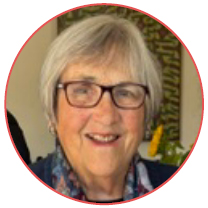
Jo Ayers
Rongopai Eucharistic Community
Josephine is a laywoman who has studied and taught liturgy in parishes, training colleges, and universities. She holds a Masters Degree in Theology from Notre Dame University, Indiana.

John Collins
Rongopai Eucharistic Community
John chairs the coordinating group who serve the community. He is a retired medical specialist in Nephrology and Benedictine Oblate to the World Community of Christian Mediation.

John Scoble
St Lucia Spirituality
John lives with his wife in St Lucia, Brisbane. After growing up in a traditional Catholic family, over the past decade he has questioned and discarded some of his traditional beliefs, instead focusing on the essential elements of Christianity within a cosmic world view. John is the Co-Moderator of St Lucia Spirituality.
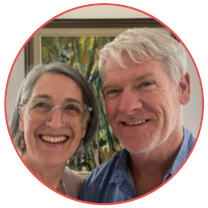
Petra Ball and Terry McDevitt
Teams of Our Lady
Petra and Terry are the Responsible Couple for Marriage Teams Oceania (since 2021). They have been members of ‘Teams’ for 25 years. Petra’s career has been within the humanitarian sector with international organisations. Terry’s work has been in health care and, most recently, in humanities and religious education.
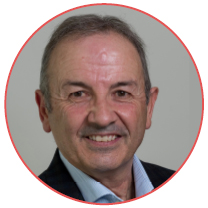
Mark Gaetani
St Vincent de Paul Society
Mark joined St Vincent de Paul in 2016 and became Tasmanian State President from 2018 to 2022 and Australia’s National Council President in 2023. Most of his working career was devoted to banking and finance with the Commonwealth Bank of Australia.
MODERATOR

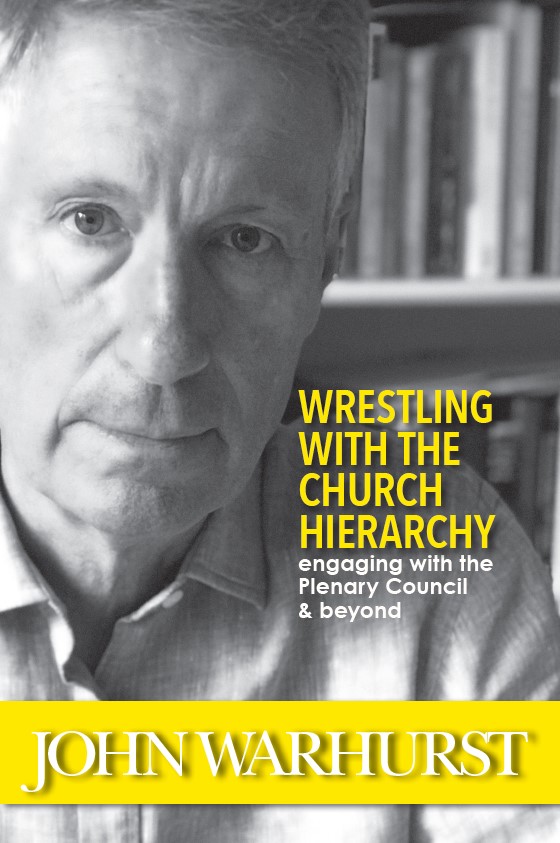
John Warhurst
John is a director of CAC and the founding chair of Concerned Catholics Canberra Goulburn. He writes for Eureka Street and Flashes of Insight.
RECORDING
WEBINAR SUMMARY
What does it mean to be Catholic in Australia in 2026? Recently, more than 2,200 people registered for a webinar co-hosted by the Council of Australasian Catholics and Garratt Publishing to explore that question. Moderated by John Warhurst (Emeritus Professor, School of Politics & International Relations, Australian National University), the evening brought together eight speakers from six lay Catholic groups, each showing a different way of living the faith.
The panel opened with a reflection on “moments that are grace”, and a closing line that set the tone: we “delight in the gift of each other”.
Lay leadership in Catholic ministries: Ministerial Public Juridic Persons
Margaret Bounader of the Association of Ministerial Public Juridic Persons (AMPJP) explained one of the biggest structural shifts in the Church today. A Ministerial Public Juridic Person (MPJP) is a body created under canon law to hold authority over Catholic schools, hospitals, aged care and community services. Where religious congregations once held that authority, lay trustees now do.
The numbers are striking. Together, MPJPs oversee more than 500 Catholic ministries, and more than 90% of their trustees are lay women and men. Margaret described the work as “a ministry of the church”, grounded in prayer, discernment and formation, not simply corporate governance. She presented it as an example of co-responsible leadership, a lived outcome of the Second Vatican Council.
Catalyst for Renewal: conversation as a spiritual practice
Denise Playoust, President of Catalyst for Renewal, described more than 30 years of promoting open, respectful dialogue in the Church. Her group defines conversation as a spiritual exercise that needs a listener’s open mind and heart, which she linked directly to synodality. Its programs include Spirituality on the Sofa, reflection mornings, retreats and lectures. For some members, she said, Catalyst “has become church”.
Rongopai Eucharistic Community: shared liturgical leadership
From Auckland, Jo Ayers and John Collins presented a lay Eucharistic community built on shared liturgical leadership. Four roles share each liturgy: gatherer and sender, leader of the word, homilist and leader of Eucharist. The community prepares together each week on Zoom, and the homily ends with a question for small-group discussion. About 60 people belong, in person and online, and 60% of regular donations go to social justice causes. They spoke candidly about adapting practice, including lay preaching and inclusive language.
Teams of Our Lady: the spirituality of marriage
Petra Ball and Terry McDevitt introduced the Teams of Our Lady movement (Équipes Notre-Dame). Teams of four or five couples meet monthly, often with a priest or religious, over a simple meal. Each couple also keeps a monthly “sit-down”, a time of deep listening. Speaking in the tenth year since Amoris Laetitia, they highlighted accompaniment, discernment, mercy and the vocation of marriage. They also named real challenges, including the falling rate of marriage and the need to welcome migrant communities.
St Lucia Spirituality: a spiritual journey beyond religion
John Scoble described a non-denominational community of spiritual seekers, mostly mature-age Catholics, Uniting and Anglican. It offers online “butterfly” meetings, neighbourhood groups and a strong emphasis on an informed conscience and personal agency.
St Vincent de Paul Society: a Catholicism of encounter
Mark Gaetani, National President of the St Vincent de Paul Society, spoke on the Vincentian charism: the gift of recognising Christ in people who are poor or marginalised. The Society began in Paris in 1833 with Frédéric Ozanam and now has more than 45,000 members and volunteers across Australia. His message was to see, to serve and to transform, offering “a hand up” and not “a handout”, through accompaniment, dignity and justice.
What the panel said about the future
The Q&A drew out several shared themes:
- Formation matters. Whether for trustees, team members or Vincentians, forming people in mission and gospel values keeps ministries faithful.
- Avoiding silos. Panellists acknowledged the risk of intense communities becoming insular, and the need for outreach and for working with parishes.
- Welcome and inclusion. Speakers talked about meeting people where they are, including those hurt by the institutional Church, and about greater openness to diversity. Several said their own views might go further than official positions.
- Younger members and migrant communities. The Vinnies’ average member age is 76. Panellists pointed to personal invitation, online engagement and young people’s strong interest in social justice as ways forward.
- Co-responsibility. Lay, religious and ordained working side by side, and reducing clericalism, came up again and again.
A hopeful picture of the Catholic Church today
Denise Playoust put it well: she thought she was “in the loop”, only to find that her loop was “a bit small”. From governance to the kitchen table, these movements show a Church of many faces. The recording will be shared with registrants, and Garratt Publishing invites you to join future webinars.